This post may contains affiliate links. We may earn a commission, at no additional cost to you, if you make a purchase via our links. See our disclosure for more information.
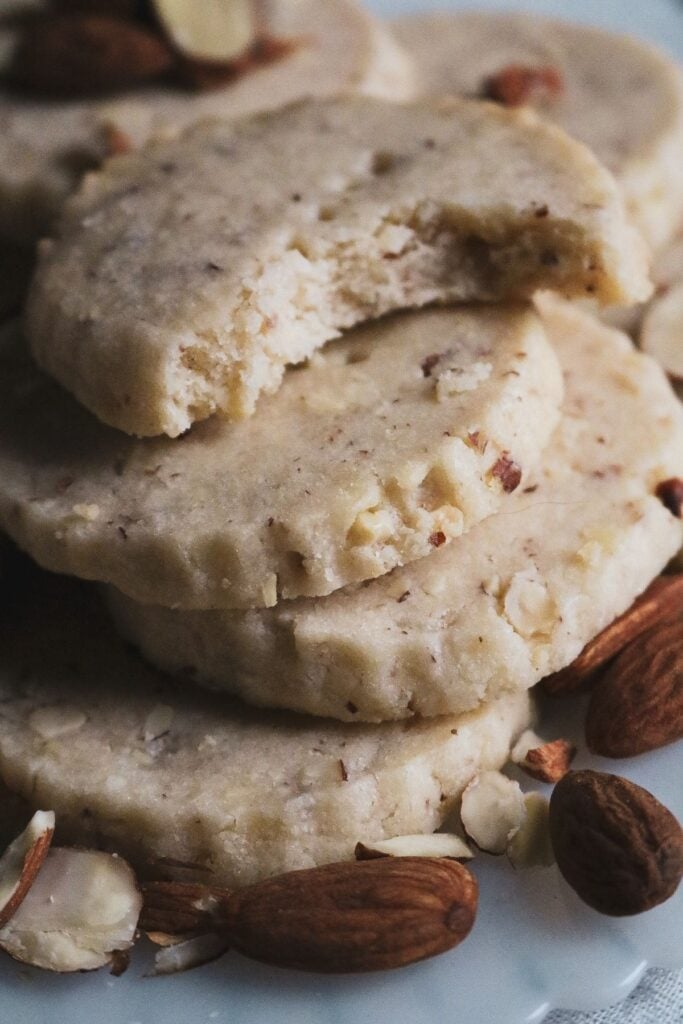
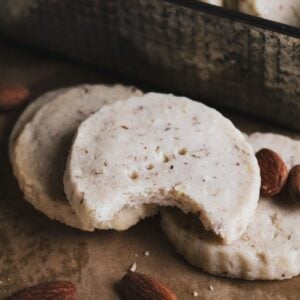
Homemade almond shortbread relies on a handful of everyday ingredients, but transforms them into something so special. Thanks to the mix of granulated and powdered sugar and a little cornstarch, the cookies melt in your mouth, leaving behind morsels of real almond and just enough almond extract.
Shortbread is one of those almost-too-simple recipes. Isn’t it missing something? But then you take a bite and you can understand why it’s been such a treasure for hundreds of years.
And if we think about it, how could something made with mostly butter, sugar, and flour ever be bad anyway?
I’ve been looking for my “perfect” shortbread recipe for years and have been in the recipe testing trenches to find the right one. And my friend, if this one wasn’t top notch, I would not be sharing it.
This recipe may look a little complicated since it uses two types of sugar and cornstarch in addition to the flour, but trust me, you will understand after the first bite.
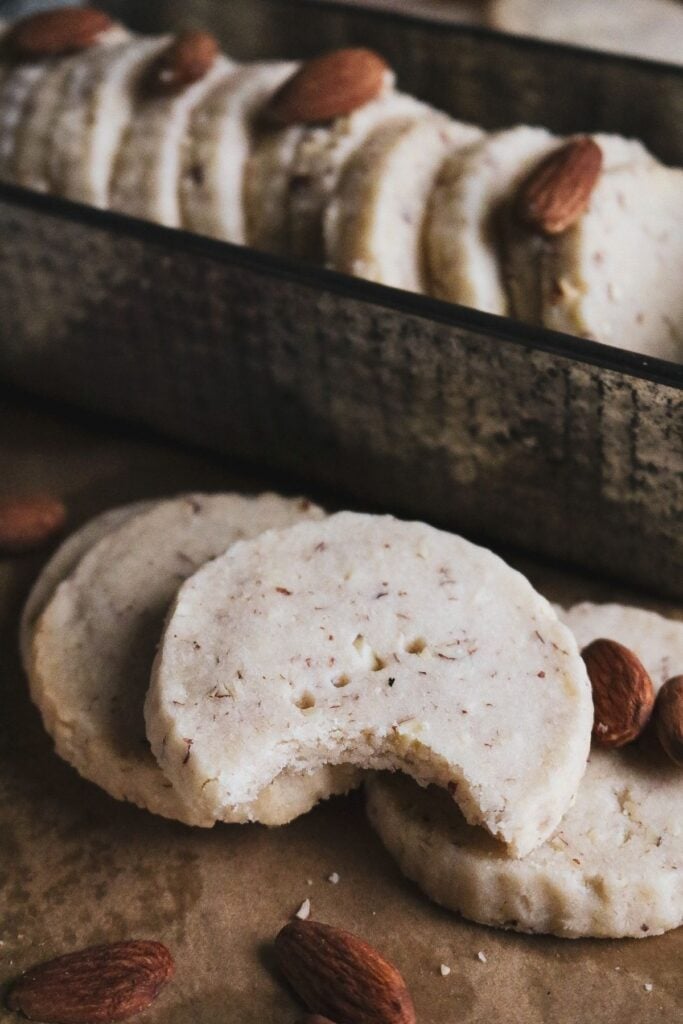
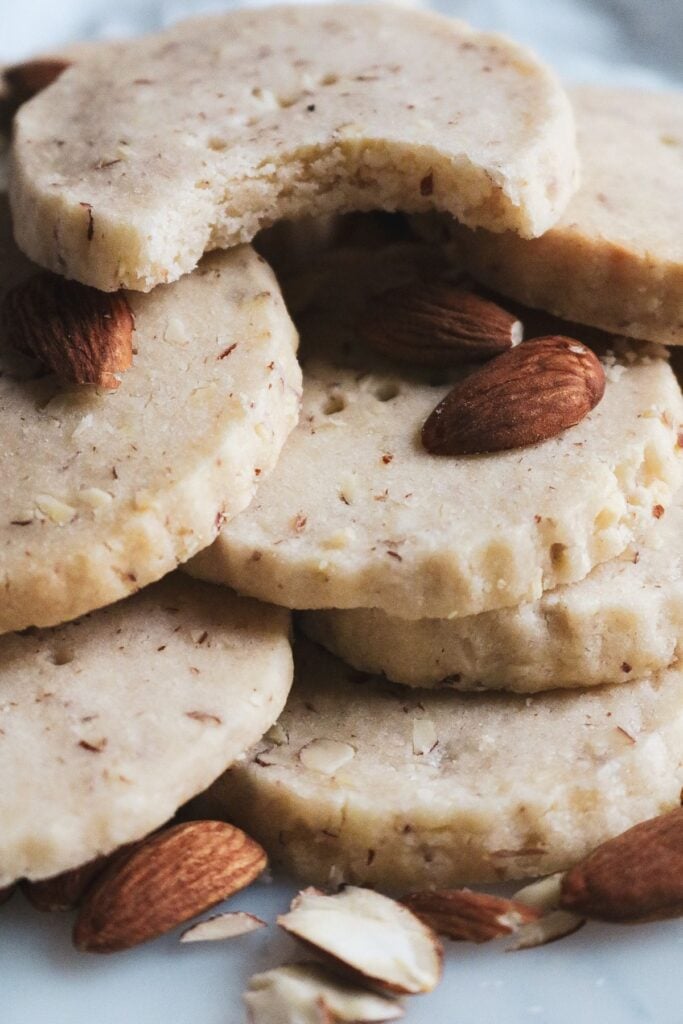
The edges shatter and melt, revealing layers of almond flavor and little bits of chopped almond. I like to cut them a little thick and especially like it when the edges are oh-so-slightly underbaked. Mmm, heaven!
This shortbread makes a great homemade holiday gift! Box some up to share with coffee or drizzle some with melted chocolate for extra decadence.
Ingredients for Almond Shortbread
Traditional shortbread only has to have three ingredients: butter, sugar, and flour. In my testing, I found that I preferred the 3:2:1 ratio for shortbread, which is 3 parts (by weight) of flour, 2 parts of butter, and 1 part sugar.
This gives you the balanced, not-too-sweet shortbread you’re looking for. But I also saw a lot of recipes that swear by cornstarch and rice flour. Since I’m a cornstarch fan who uses it in almost every dessert, I knew it would be my go-to.
I started with 1/2 cup of cornstarch, which worked well, but just seemed like more than you really need. After reducing it down to 1/4 cup per batch, the shortbread comes out just right every single time.
Technically, you can skip it, but I recommend trying it if you can! Cornstarch helps absorb moisture and gives you that crisp, shattering texture on the edges.
To get that almond flavor, we’re using almond extract and finely chopped almonds. You really don’t even need to toast them! They’ll toast while baking. You can skip the chopped almonds, but I like the combination of that amaretto-like flavor from the extract alongside the crunch and natural flavor of the real deal.
How to Make Almond Shortbread
I’ve provided very detailed, step-by-step instructions in the recipe card, which I recommend following especially the first time. But basically, shortbread is very, very simple and straightforward.
- We are going to start by mixing the softened butter with granulated sugar until it’s soft and fully incorporated. You can do this by hand, but I prefer the texture you get from using a stand mixer.
- Then, you’ll add the extract and the powdered sugar. Once those are incorporated, you’re ready for the dry ingredients and the chopped pecans!
- Mix until the dough comes together (you may need to knead it into a ball), then you’re ready to shape and chill before baking. Easy!
Storing Suggestions
Once baked and fully cooled, your shortbread will keep for about 1-2 weeks. Definitely keep it in an airtight container to avoid it going stale and to preserve the nice snap and bite.
If you end up baking a ton at once, you can also freeze the extras. They’ll thaw pretty quickly at room temperature.
Tips & Variations
- There are so many ways to vary shortbread to make it your own. Swap out pecans for pecan shortbread. Fold in some mini chocolate chips for chocolate almond. You can also adjust the shape to make fingers, cut-out rounds, or basically any shape you’d like!
- Use salted butter. I know that MANY people are put off by baking with salted butter, but just try it! The extra salt really brings out the flavor of the butter and the nuts, and it is never “too salty.”
- If the dough seems overly soft or sticky at any point, put it in the fridge. When I work with this dough, it is always smooth, pliable, and easy to shape. You may have issues if your butter or kitchen are too warm. Your fridge can help a ton in this situation!
- Remember: the butter needs to be COLD before baking. After shaping, you really need to get these babies in the fridge to firm up. Otherwise, the butter can melt out and cause the cookies to spread and burn. We do not rush the shortbread.
More Cookie Recipes
Especially if you’re making a holiday gift box, I recommend pairing this shortbread with my double chocolate peppermint cookies, Christmas M&M cookies, and my Christmas sprinkle sugar cookies (all coming ASAP).
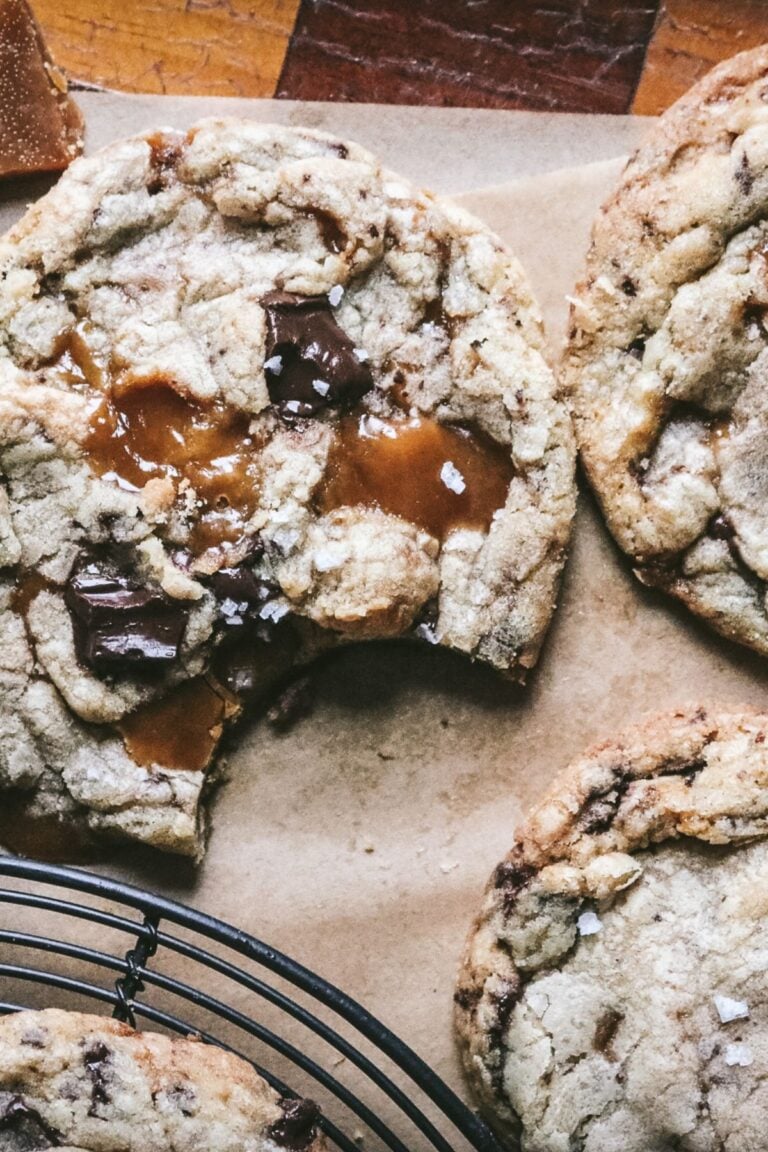
I also love to pair them with my brown butter chocolate chip cookies. The texture is so different, but the nutty brown butter complements the buttery almond.
And of course, is it even the holidays without gingerbread? We like to make this honey gingerbread recipe. So chewy and tender, and loaded with warm spices!
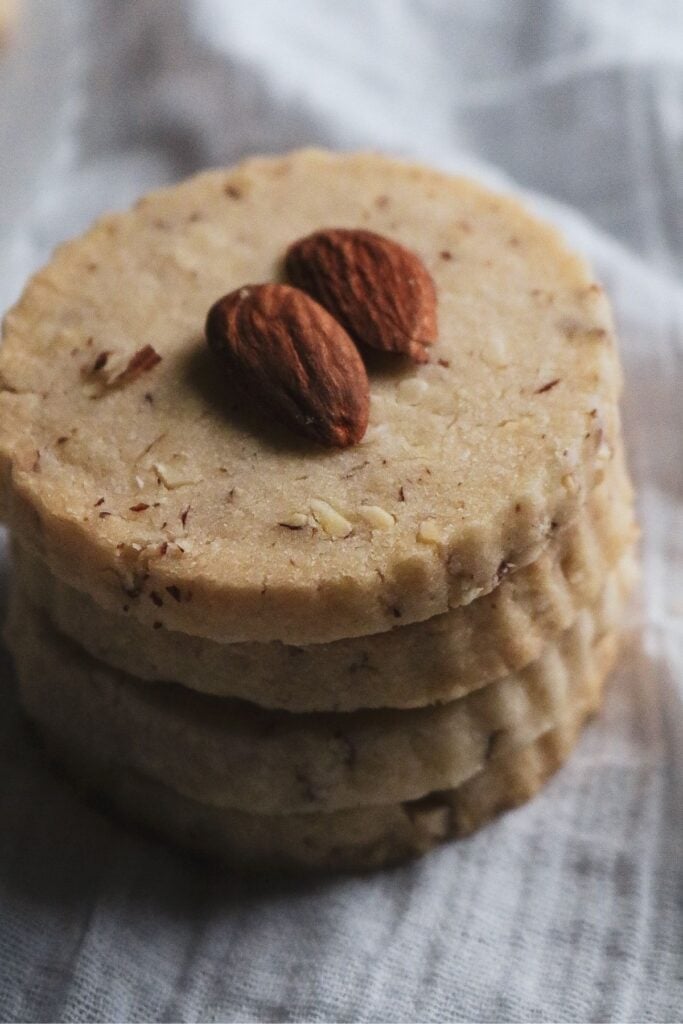

If you made this recipe, please leave a comment or ask a question below! I’d love to hear what you think or troubleshoot any issues.
Get my FREE Homestead Kitchen Supply List to make it easier than ever to cook and bake from scratch.
Want more seasonal recipes? Subscribe for email updates or follow Milk Glass Home & Kitchen on social media. Join my Facebook Group Seasonal Slow Living to become part of the community!
Easy Almond Shortbread Cookies
Equipment
- Stand mixer with paddle attachment or a medium bowl with a hand mixer
- half sheet pan
- parchment paper sheets
- Rolling Pin optional
- Cookie cutters optional
- granton edge knife for sliced cookies
Ingredients
- 1 cup salted butter, (1 cup; 227g) fully softened at room temperature
- 1/4 cup white sugar, 25g
- 1/2 cup powdered sugar
- 2 cups all purpose flour, 250g
- 1/4 cup cornstarch
- ¼ tsp fine salt, or ½ tsp kosher salt
- 1 tsp almond extract
- 1/2 cup chopped almonds
Instructions
- In the bowl of a stand mixer or in a medium bowl with a hand mixer, cream butter and granulated sugar until light and creamy.1 cup salted butter, 1/4 cup white sugar
- Add the powdered sugar and extract and mix in well.1/2 cup powdered sugar, 1 tsp almond extract
- Then, add the salt, flour, cornstarch, and almonds. Mix until the dough begins to come together and pull away from the sides of the bowl.2 cups all purpose flour, ¼ tsp fine salt, 1/4 cup cornstarch, 1/2 cup chopped almonds
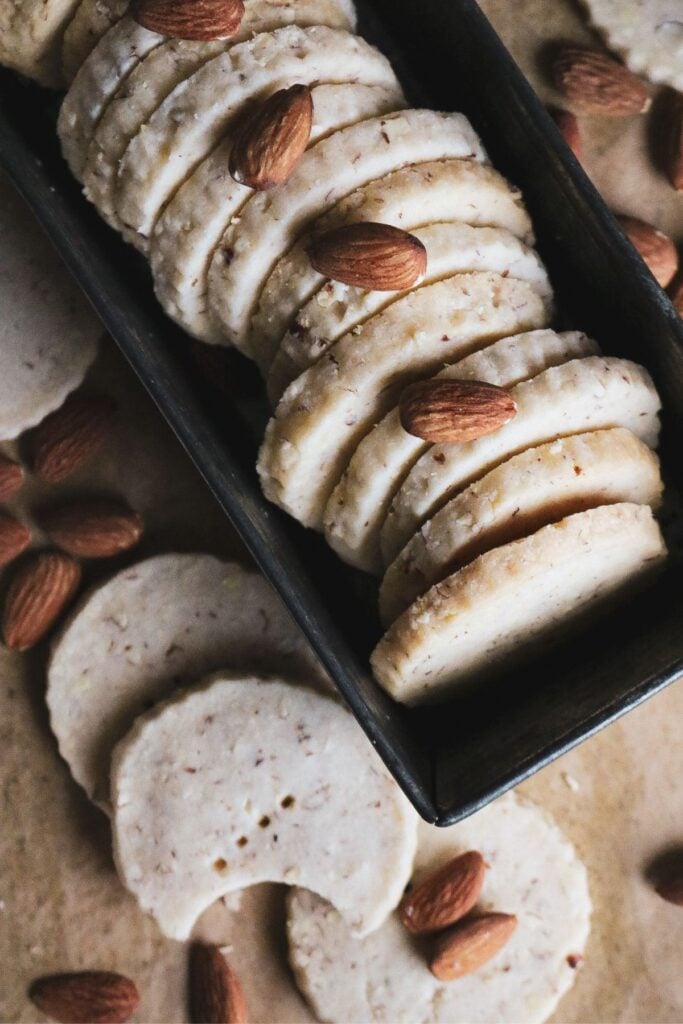
- To shape the dough, I usually dump it all out onto a sheet of parchment paper and knead it gently into a ball. Depending on how you want to shape your shortbread, you may want to roll it out, press it into a parchment-lined square metal baking pan, or twist it into a log to make sliced shortbread cookies. – For fingers: I like to use a square metal baking pan simply for getting a nice, consistent square shape. Chill the dough in the pan, then lift out with the sides of the parchment to cut and separate. Spread evenly across a lined sheet pan and poke a fork into the center of each finger 1-2 times.– For sliced cookies: You'll want to roll the dough into a long approximately 2-3 inches thick. Twist the ends to wrap it like a giant candy and refrigerate standing on one end (this prevents the log from becoming misshapen while chilling). Once fully chilled, use a slicing knife to cut the long into 1/2 inch thick slices and arrange evenly on a baking sheet.– For cutout cookies: Roll out the dough in a 1/2 inch thick sheet and cut out using cookie cutters. Transfer the cutouts to a parchment lined tray and then continue rolling and trimming the dough until it is all used up. If you prefer, you can chill the dough for 30 minutes before shaping to help it firm up.Whichever method you prefer, you generally want to aim for 1/2 inch thick, although slightly thicker is okay, too. Be sure to prick holes on top to help them bake evenly.
- Chill the dough completely for at least an hour. It should feel solid to the touch before baking.
- Once ready to bake, preheat the oven to 325F. Bake for approximately 10-15 minutes depending on thickness and shape. The rounds in my photos took 14 minutes. For gauging doneness, you can go until the edges are very lightly golden brown, but I usually stop sooner. I look at the tops of the shortbread. If it still looks wet or shiny at all, I keep going a little longer. It is tricky to tell when they are still warm but when properly done, the bottoms of the shortbread should not look wet in the centers. They should snap on the edges and melt and crumble on the inside.
- Remove from the oven and let the shortbread firm up on the sheet pans as much as possible before moving. The flavor will develop as the shortbread sits and they oven taste even better a day or two later!
Notes
Nutrition
Did you try this recipe?
Post a photo and tag @milkglasshome!Pin this recipe for later!