This post may contains affiliate links. We may earn a commission, at no additional cost to you, if you make a purchase via our links. See our disclosure for more information.
Food is the most important part of any homesteader’s life. Whether you’re growing it, preserving it, or baking it, the kitchen is the truly the heart of the home. And to do it well? You need to be organized.
This post will guide you through setting up a seasonal homestead pantry, including what to buy, where to source things, and how to keep everything fresh.
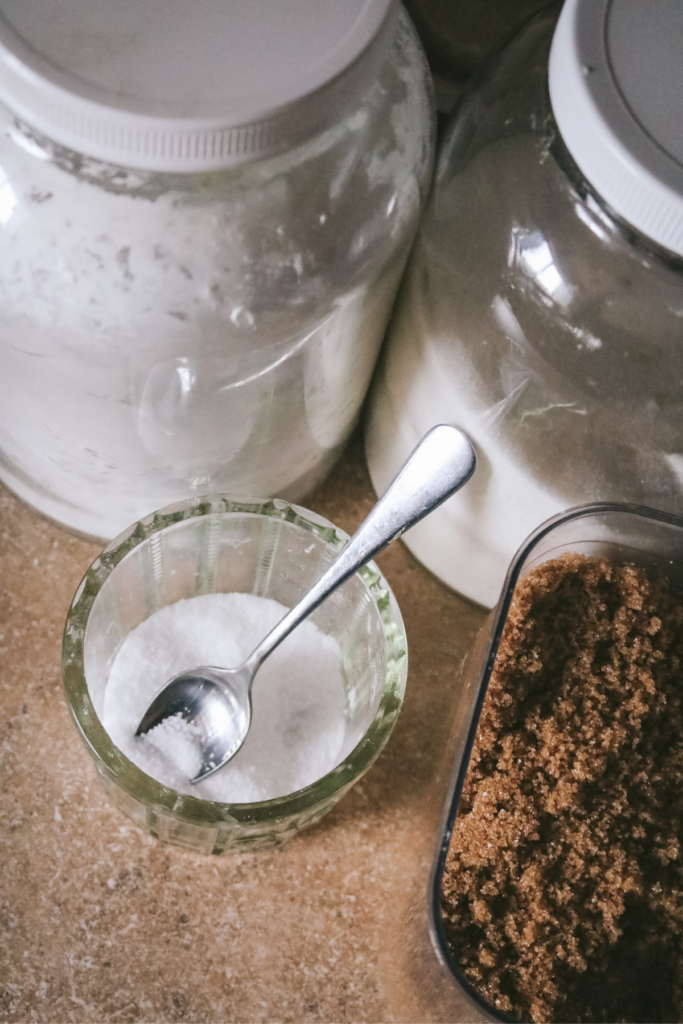
Switching to a Seasonal Homestead Kitchen
If you’re setting up a homestead kitchen or simply want to take charge of your food system, your pantry is your toolkit. This is where you find the ingredients to throw together healthy meals, can your garden excess, and make your granola, bread, and more.
Taking the time to properly stock your pantry will help you:
Make recipes more easily
How frustrating is it when you find the perfect recipe, but you realize you’re missing _______? This happens way less often when your pantry is well-stocked.
Grocery shop faster
If I don’t know what I need for groceries, I end up wandering the store. This always means I buy random stuff I don’t need and forget the essentials!
Plus, once your pantry is fully stocked, shopping is much easier. You just restock what is low. Doesn’t it sound nice to simplify at least one part of your life?
Enjoy cooking again
You’ll have much more fun cooking when you have everything you need and don’t have to scramble to the store at the last minute.
Save money
There are a variety of ways you save money!
- Fewer runs through the drive-thru
- Fewer grocery store impulse buys
- Only buy the basics you need
- Buy in bulk for products you use often
- Stop buying overpriced processed foods
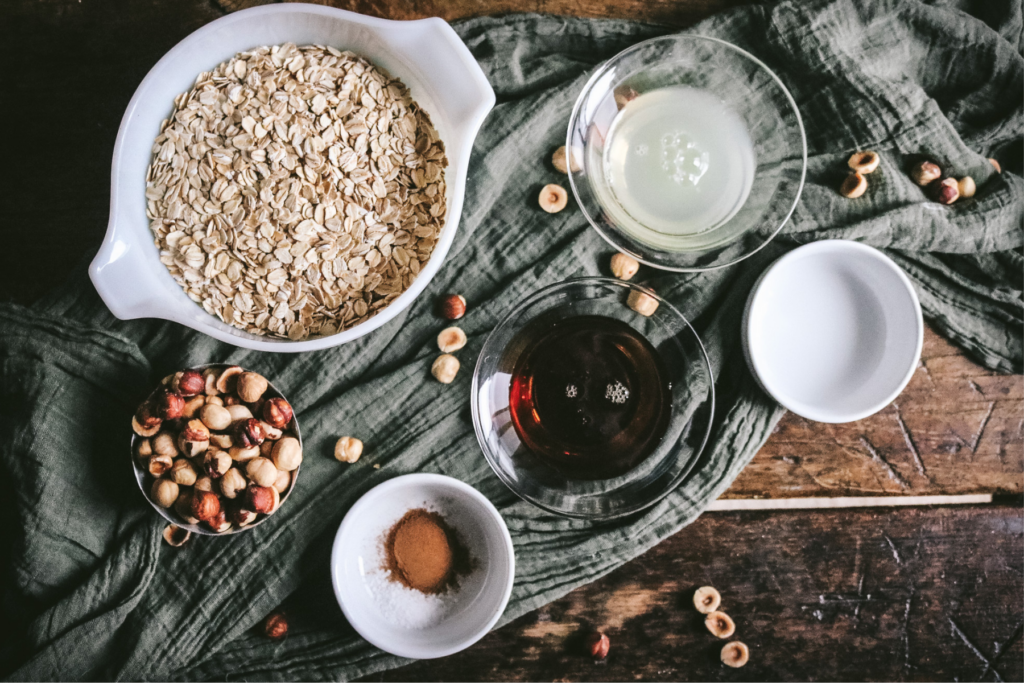
My Homestead Pantry Philosophy
Our home consists of two people, me and my husband, plus a couple of cute critters.
We’re definitely an ingredient household and prefer to buy simple, mostly organic ingredients, not finished products.
We grow a big garden every day and dehydrate, freeze, and can as much as possible, but since we live in a small suburban neighborhood, there is only so much we can produce ourselves.
Although we do eat some processed foods, we’re much more likely to whip up a batch of cookies ourselves than to buy a pack of Oreos. Those are more like special occasion treats!
We also tend to buy in bulk to reduce packaging waste and get the best unit price.
We order from Azure Standard about once every 1-2 months, visit Costco every week or two, and supplement with farm stores, regular grocery stores, and the garden.
Homestead Pantry Staples
Your pantry is more than just your actual pantry. It includes your fridge, freezer, spice cupboard, and, if you’re lucky enough to have one, your root cellar!
To help, I’d love to map out each of these sections, literally walking you through our own setup.
➡️ I have a free printable Pantry Staples List that turns ALL of this into an easy-to-use checklist. Get your free Homestead Pantry List here.
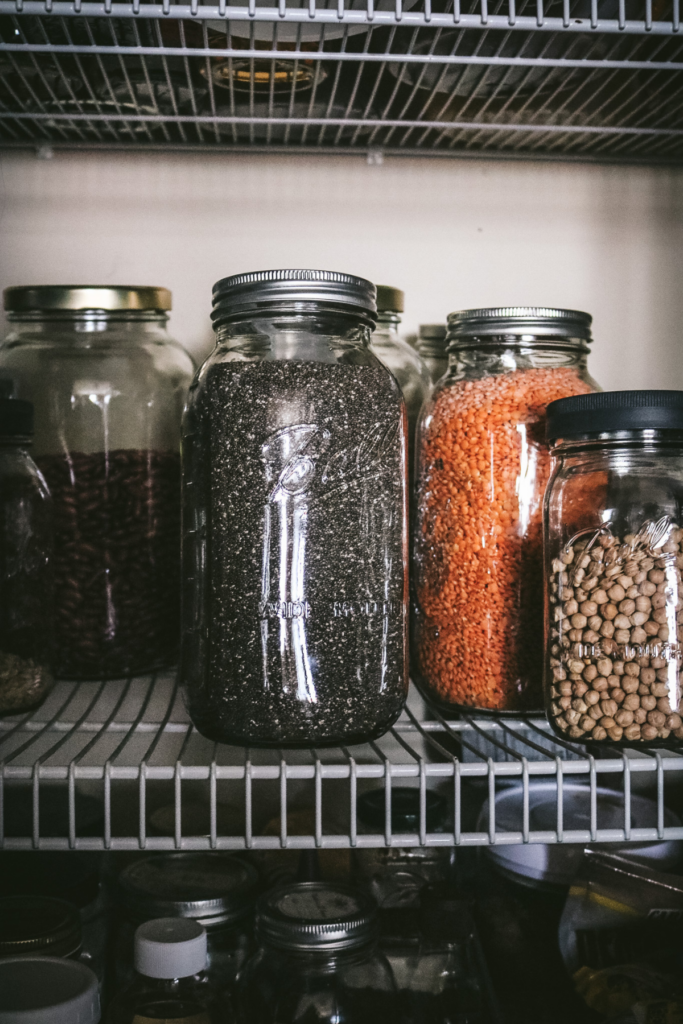
Dry Goods
- Oatmeal
- Dried fruit
- Dried pasta
- Rice
- Quinoa
- Nuts or seeds
- Nut butter
- Applesauce
- Jam or jelly
- Dried beans
- Canned beans
- Canned vegetables
- Diced tomatoes
- Tomato paste
- Tomato sauce
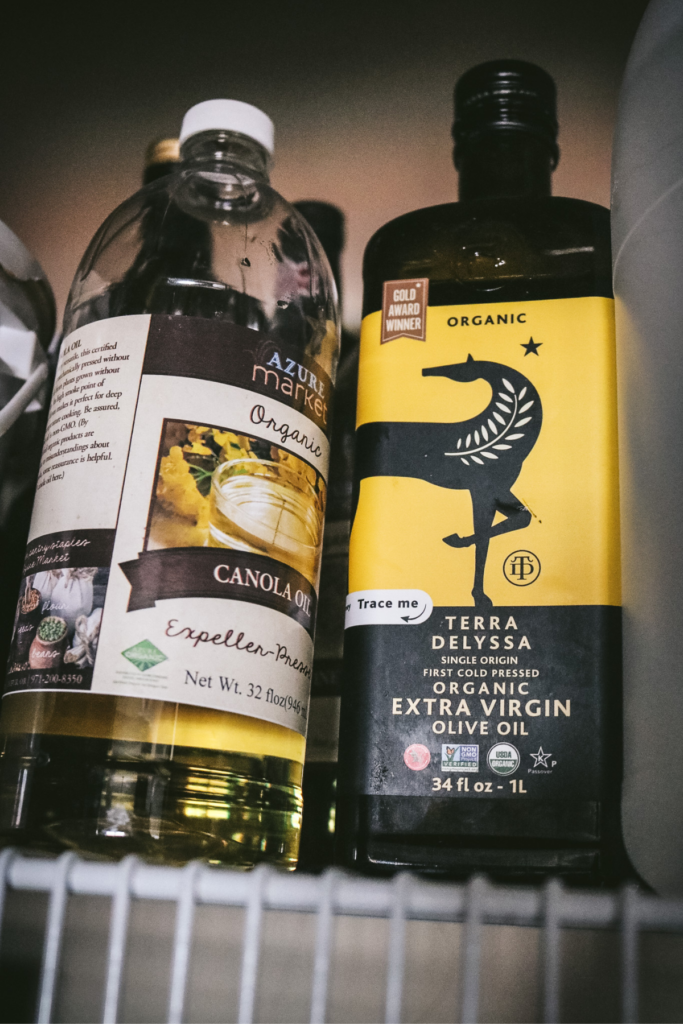
Oils & Sauces
You’ll also likely notice that some of these things you could made yourself. For example, you can make and can your own BBQ sauce, pasta sauce, diced tomatoes, etc.
Depending on how “from scratch” you want to be, you may find yourself buying these things at the store or DIYing at home. There is no one way to be. I find these specific components help a ton when preparing simple meals at home and if you prefer to make them yourself, all the better.
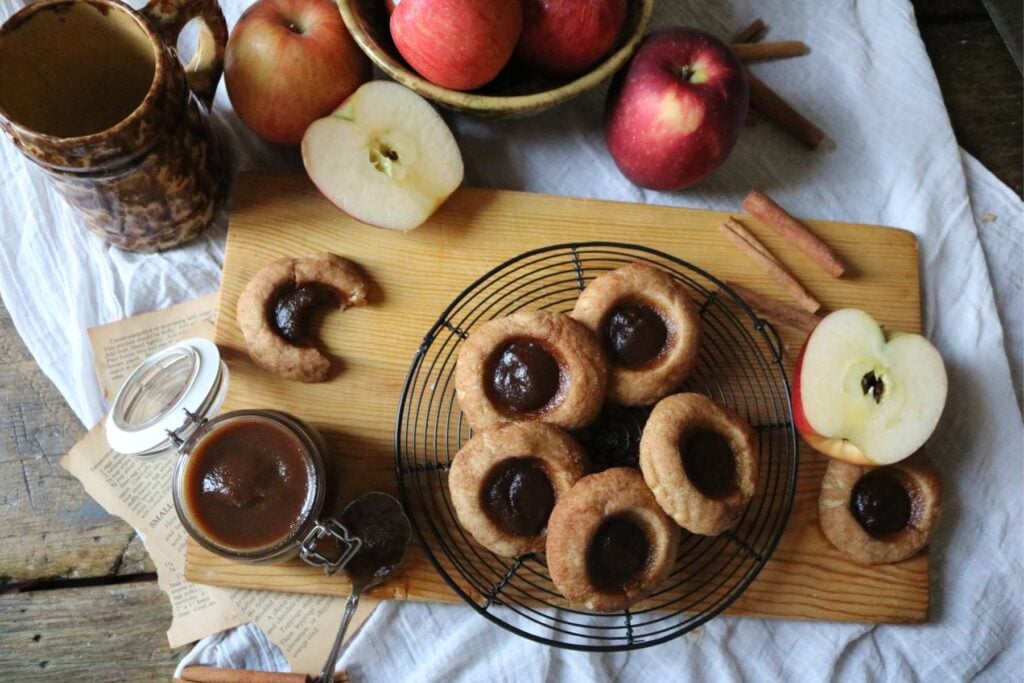
We always have cases of jams, jellies, pickles, and apple butter on hand that I don’t necessarily track since I make them myself.
- Extra virgin olive oil
- Coconut oil
- Soy sauce
- Bottled lemon juice
- Lime juice
- Apple cider vinegar
- Balsamic vinegar
- Rice wine vinegar
- White vinegar
- Mustard
- Ketchup
- Mayonnaise
- Worcestershire sauce
- Chicken stock
- BBQ sauce
- Salsa
- Marinara sauce
- Pizza sauce

Pantry Staples for Baking
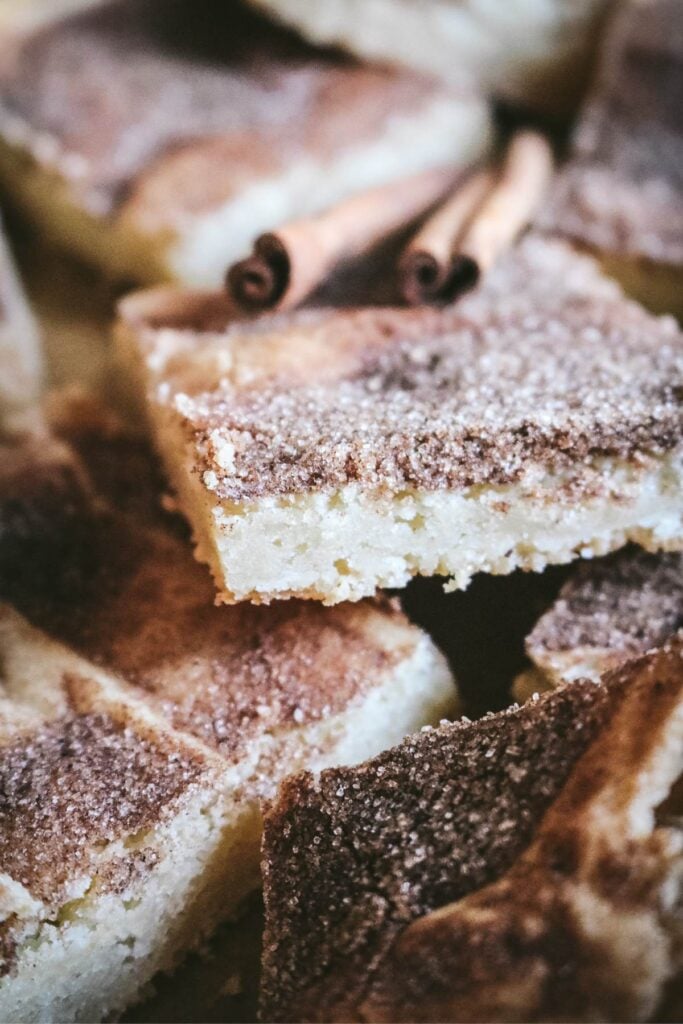
I’m an avid baker, and get more joy out of pulling together a quick batch of scones than basically anything else.
You’ll notice that almost all of my recipes on this site are seasonal baking recipes…there’s a reason for that.
If you want to bake too, it is VERY helpful to have at least these ingredients on hand at all times.
There are some other places you can expand for more variety, like buying pastry flour or different types of cocoa powder, but these are good to start.
- All-purpose flour
- Bread flour
- Whole wheat flour
- Cornmeal
- Cornstarch or arrowroot powder
- Baking powder
- Baking soda
- Cocoa powder
- Shredded coconut
- Chocolate chips
- White sugar
- Brown sugar
- Powdered sugar
- Molasses
- Maple syrup
- Honey
- Yeast
- Vanilla extract
Learn more about my must-have baking essentials here.

Wish someone could help you?
If you want a one-touch solution to setting up your homestead pantry, meal planning, and jumping into food preservation, you’ll want my starter kit.
It’s a practical jumpstart built on the functional systems and methods I’ve developed over the past ten years.
Spices & Seasonings
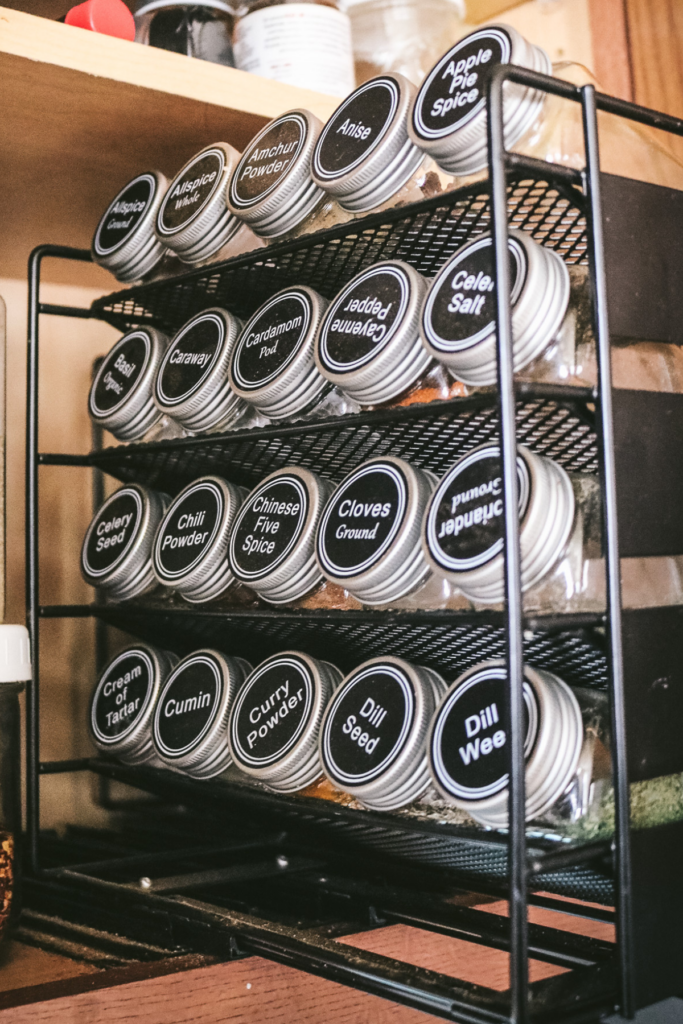
Okay, I admit that I have a little bit of a spice problem. We LOVE using spices and herbs, and also enjoy trying different flavors. Our spice cupboard is very well-stocked.
These are the basics we recommend for everyone, although you will certainly want to adjust based on your cooking preferences and cultural background.
- Kosher or sea salt
- Black pepper
- Allspice
- Basil
- Bay leaf
- Cinnamon
- Chinese Five Spice
- Cloves
- Coriander
- Cumin
- Cream of tartar
- Dill
- Pumpkin/apple spice
- Ground ginger
- Garlic powder
- Nutmeg
- Onion powder
- Oregano
- Parsley
- Sage
- Thyme
- Italian herbs
- Paprika
- Chili powder
- Red pepper flakes
- Curry powder
- Taco seasoning

Pro Tip: Use the Best Spices!
The quality of your recipes hinges on the quality of your ingredients. The spices from Burlap & Barrel are hands-down the best quality you can find.
All of their spices are grown using organic methods on small family farms around the world. They’re never irradiated and have the absolute best flavor.
Order your next batch of spices through them and get a FREE bottle of Robusta Black Peppercorns (1.8 oz grinder-top bottle)! Just be sure to add the peppercorns and $15 worth of products to your cart, then use code MILKGLASSHOME.
Meats and Protein
I used to go through my fridge shelf-by-shelf to explain what I have, but since so many of us store things differently, it’s more practical to talk about the what than the how.
Of course, pretty much all of these things are in the fridge, although we keep a big backup freezer full of butter and meat, too.
And even though we’re just a two-person household, we usually have at least 5 dozen eggs in the house at all times. They’re convenient, usually inexpensive sources of protein and they last a long time!
- Eggs
- Cottage cheese
- Sour cream
- Yogurt
- Cheese
- Milk
- Butter
- Half and half
- Cream
- Ground meat
- Bacon
- Breakfast sausage
- Sausage
- Chicken
- Meat substitute (if using)
We like to stock up from Wild Pastures every once in a while. Great quality meats, and I like that they offer offcuts and offal, too!
Fresh and Frozen Produce
Although I sure wish I could eat from the garden all year long, I grow in a small suburban backyard and can only produce so much.
In general, we eat all of these different fruits and veggies, PLUS we adjust seasonally. This is the most important part.
When we focus on produce that can last a long time (carrots, potatoes, onions), we end up wasting less and they tend to be cheaper, too.
Supplement with fresh berries, peaches, plums, and melons when they are in season. They’ll taste better, travel fewer miles, and cost less!
We also like to freeze as many of these foods as we can to pull from all winter long.
Learn how to freeze cherries or berries here.
- Apples – We usually get them by the case, and just keep them in a crisper drawer.
- Bananas
- Carrots
- Celery
- Onions
- Potatoes
- Sweet potatoes
- Salad/greens
- Broccoli
- Cauliflower
- Cabbage
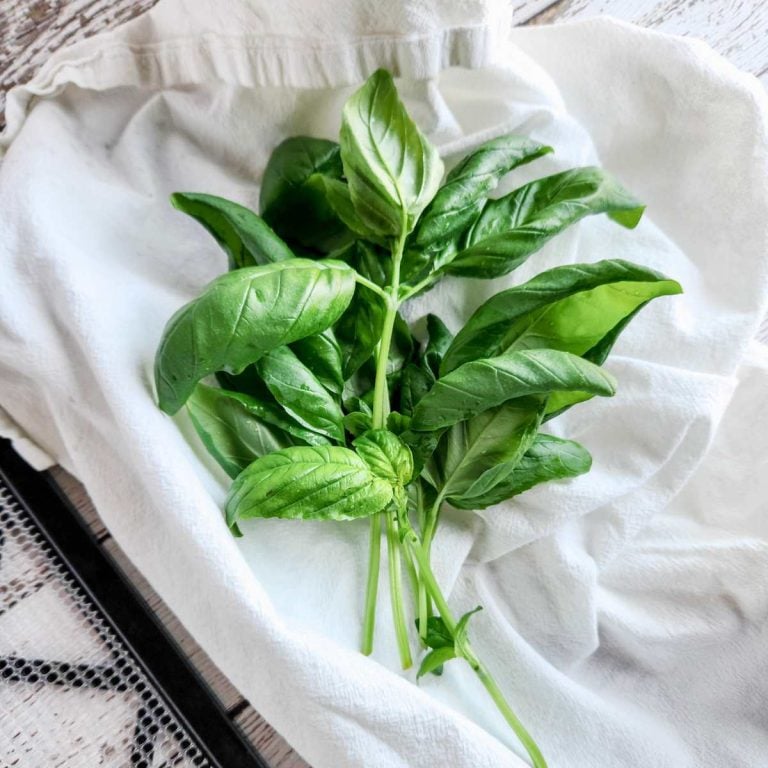
- Fresh herbs
- Frozen fruits
- Frozen vegetables
Next Steps
If you’ve made it this far, you’re in a good place to get your pantry up and running.
The most important next step, in my opinion, is to focus on meal planning.
Without a strong meal planning routine, you will end up wasting food and spending extra on last minute takeout and prepackaged foods.
It’s absolutely essential and I’ve shared all of my tips and tricks to make meal planning as easy as possible.
Borrow my systems for yourself
Remember, my Homestead Kitchen Starter Kit will help you with all of this.
Not only will it guide you through the supplies and ingredients you’ll need, but I’ll also teach you my simple meal planning strategy, share my favorite DIY pantry staples, and more.
It’s everything I wish I had when I first started!
Once your pantry is fully stocked, you’re in a good position to think about moving onto the next project: preserving your own food!
If you want to get into canning, you’ll want to stock up on mason jars, canning lids, and more.
I have a whole post about basic canning equipment with printable checklists and everything.
It also helps to know where to buy produce in bulk, so you can start fermenting, canning, freezing, and more.
You can also invest in a grain mill and start milling your own flour instead of buying the pre-milled stuff at the store.
Tips for Homestead Pantries
1. Think about your containers
I know aesthetic pantry hauls are the thing on TikTok, but that’s not practical. It’s totally okay to store ingredients in the container they came in, especially if they are naturally airtight.
But once you start buying in bulk? You will often need to transfer them to something to keep them fresh.
I always prefer to store in glass over plastic, especially mason jars. Azure Standard has so many options, and I’m especially partial to their half gallon mason jars and big gallon jars.
For flour and whole grains, I actually use rolling plastic pet food containers I bought on Amazon. We don’t like to shop there, but I was tired of spilling flour everywhere and wondering which bag had what.
We bought 4 of them and usually place the whole Azure Standard bag directly in each one. This minimizes mess (and clean-up) and they’re super easy to use.
2. Buy what you need, not the best deal
It is so tempting to buy 50 lbs of whatever to get the best deal, but where will you put it? And how quickly will you use it?
Make sure you are only buying quantities that fit in your storage space and that you can safely use before it goes bad.
Those Costco-sized bags of tortilla chips? We always end up with about a third of the bag being wasted. That’s only a couple of dollars, but wasted meat? Dairy? Nuts? That’s big money!
3. Rotate your inventory
You’ll also want to make sure you’re cleaning your food storage containers after every use, watching for bugs and pests, and rotating.
FIFO is your friend – first in, first out.
Put new ingredients behind the older ones so you use them first.
I also take inventory of my pantry every 3-6 months to figure out what I need to use up before it goes bad. Little steps like this can really save a lot of money in the long run!
Seasonal Eating Resources
What we eat and how we cook shifts with the seasons. Think of this list as your starting point, and explore the posts below for more specific guidance.

How to Adjust for Dietary Needs
I totally understand if you need to adjust based on your particular dietary needs or preferences. A well stocked pantry only works if it’s stocked with foods you can actually eat!
Here are some ways to shift based on your needs.
Low carb
Sub out the all-purpose flour for almond and coconut flour and the sugar for monkfruit and stevia. Remove rice, couscous, and pasta. Double up on riced cauliflower in the freezer!
For basic staples, you’ll probably want to focus on oils, fats, and nuts. Consider stocking some canned green beans!
Vegan
Remove the eggs, dairy, and frozen meat. Substitute the pasta for vegan varieties.
Consider bringing in some non-dairy yogurt and some plant-based meats or increase the dried beans.
Sub out the chicken bouillon for a vegetable base and clear your freezer of frozen meats. Consider adding some nutritional yeast flakes for a boost of flavor! Add more dried beans and quinoa.
Gluten-free
Swap out the pasta for your favorite gluten-free variety, like rice. Sub out the flours with gluten-free ones like rice flour, tapioca starch, or almond.
Be sure your oats are processed in a gluten-free facility! Skip regular soy sauce and get the gluten-free soy sauce instead.

If you enjoy this post, please leave a comment or ask a question below! I’d love to hear what you think and hear about your own experiences.
Want more seasonal recipes? Subscribe for email updates or follow Milk Glass Home & Kitchen on social media. Join my Facebook Group Seasonal Slow Living to become part of the community!
Related Resources
- Zero Waste Pantry Staples
- How to Shop Local on a Budget
- Complete Guide to Suburban Homesteading
- Inside My Homestead Kitchen Starter Kit
- Free Printable Recipe Card Templates
Pin this post for later!



This is all such great advice, particularly in our current pandemic situation! We also have a large deep-freeze, and over-sized pantry. During these past months, we make fewer grocery runs, and make a point to stock up on lots of things that can go in the freezer or are shelf stable. Right now, with our garden goodies ready to harvest, we can go quite awhile without a visit to the store!
Thanks for sharing at my Sundays on Silverado Link Party!
-Niky & The House on Silverado
Thank you so much, Niky! I agree 100%! We’re in similar situations. I’m trying to get a food more things processed and stocked up before school starts so we can have back-ups in case the numbers rise in our area. I want to see more garden pics! 🙂
Pinned – great article!
This post is featured today at Sundays on Silverado Link Party! Thanks so much for sharing, Rachael! I hope you’ll link up again!
-Niky @ The House on Silverado
Sundays on Silverado Link Party
Woohoo! Thanks so much, Niky! I visited this morning and loved the great posts! 🙂
Thanks for all the pantry-stocking tips—these are great! I need to be better about stocking the right things!
So glad this was useful! Thanks for the visit, Nancy! 🙂
Hi Rachael! I saw your link on the Friday Favorites link up. This is such a thorough and helpful post. I’m a big believer in a well-stocked pantry also, and this really simplifies the process. Thanks for sharing!
So glad this is helpful! Happy to connect!
Thanks for sharing with us at Farm Fresh Tuesdays Blog Hop! Your Pantry post is one of my features at this week’s hop. Be sure to stop by to see your feature and say hi! See you there!
Melissa | Little Frugal Homestead
That’s so great, Melissa! Thank you so much. I’ll come check out the party. 🙂
This is a very thorough list, thank you. A few items I would mention: I, too, love Asian foods. However, the condiments for almost all Asian cooking contain horrible ingredients: corn syrup, msg, and other toxic things. I have found many, if not all of the Asian, condiments as healthy recipes…and have them in documents, and have ordered most of the ingredients that I keep in my pantry. Yes, some of them take a bit of time…but well worth it for my health and the health of my family. SOME of these condiments do have healthy brands, but they are few, and I do stock those.
The other thing I would mention: if you are stocking canned goods, PLEASE! Those new pop top cans do NOT store well, and they WILL pop open at some point much sooner than other ‘regular’ canned goods.
I have a great store of items in my pantry, and now, I just need to get it organized!
Carol, these are such wonderful tips! You’re totally right about the quality of the ingredients in a lot of Asian condiments. I never thought about the pop tops on canned foods! I don’t get those too often, so it never even crossed my mind. Thanks so much for sharing! Hopefully, the pantry organization bug will strike soon. I finally gave in and tidied mine yesterday. It makes cooking so much easier! I appreciate you reading and sharing here, Carol!
Interesting and great write-up. Living in NYC with no pantry, just a cupboard used to store groceries limit us to stock up on food as we want. Never heard of Crowd Cow; will check them out. Thanks for sharing.
Kevin, that definitely limits things! I’ll have to brainstorm some ideas about stocking a mini pantry as I bet there are lots of people in similar situations. Thanks for your comment!
Love this! I too love having a stocked pantry! Sometimes it’s hard to know where to start so this post is helpful
It’s great to have a pantry where when you see a recipe you want to make, you know you will have all the ingredients! It’s super freeing.
Staci, you’re totally right! I love knowing that I *already have* all of the ingredients I need. It makes cooking and baking so much easier! Thanks for your comment. 🙂
Both the husband and I grew up poor, so having a well stocked pantry as adults is huge for us. We it has been amazing especially as we learn to cook more and more from scratch
Leigh, thank you for sharing that with us! It is such a relief to know you have everything you need and I agree, it’s a fun way to start cooking more, too! Thanks for your comment!
This is such a great and thorough article! Thanks for putting all of this information together in one place!
Thanks so much, Maggie! I’m so glad this post is helpful. 🙂
Awesome post!! I’ve been looking for a good pantry checklist! Thank you so much! 🙂
Thanks, Patrick! I’m so glad this was helpful! Enjoy the checklist. 🙂