This post may contains affiliate links. We may earn a commission, at no additional cost to you, if you make a purchase via our links. See our disclosure for more information.
Living like it’s the 90s is popular all over social media right now and for very good reason. Is “going analog” the solution to what ails you or just another fad? I think it is here to stay and I am HERE for it. Here’s how to make the switch and add more slow, old-fashioned fun to your life.

You know what makes my slow living-loving heart happy right now? As we see AI and “smart” everything rising, more and more people are drawn to the exact opposite.
People want less perfection and automation, and more friction, more texture.
Ugh, even writing that makes me feel good. I love it when “trends” actually align with something meaningful!
And really, even if the term “analog lifestyle” is new, the actual lifestyle really isn’t.
In many ways, this is just slow living by another name. But I’m not here to squabble over definitions. Let’s get into it!
What the heck is an analog life?
All my readers born before the early 1990s can likely recall the real deal analog existence.
Remember the days before smartphones? The internet? Social media?
Remember having to call your friend’s house and maybe accidentally having to talk to their dad to know if Brittany was home?
Remember the ridiculous screech of logging onto the internet back in the early 2000s?
Remember having to manually rewind VHS tapes or holding your bladder during your favorite TV shows until there was a commercial?
Remember having to flip through a physical encyclopedia to find information about dragonflies or beaver dams?
Going analog isn’t so much about eschewing all of the modern conveniences, but it is about focusing on more tactile, hands-on, screen-free modes of engagement and entertainment.
Simple Ways to Go Analog in Modern Life
Here are some basic tenets to attach to. If your proposed activity fits one or more of these, it will generally fit in the “analog” category.
REMINDER: Everything is made up so do whatever you want, anyway. No one is grading you. This is for you!
1. Less digital, more physical.
Instead of living in the middle of a doom scroll, try switching away from your phone by opting for paper books, journaling, doodling, or picking up a number of analog hobbies (more on those below).
If you struggle with managing your tech usage, I recommend using a minimalist phone app or getting something like the Brick.
I’ve used this one for a couple of years now. It’s really pared down and allows you to set timers for how long you’ll be on a social media, etc. It’s not perfect because I’m not perfect and definitely work the system, but it makes me be much more intentional.
Even if you do choose to watch some TV, you can switch back to using VHS tapes (although you may have to hunt them down) or DVDs. No ads, no buffering, just the story in front of you.
A lot of people are installing landline phone lines again, or simply keeping their cellphone in a specific place to use it like a landline.
(Obviously, this is harder if you need to take your phone with you places. When I’m home, I like to keep my phone in one spot and just check it every once in a while. Easier said than done, for sure.)
Visit the library or seek out your local bookstore. Subscribe to a print magazine to get something mailed to your house.
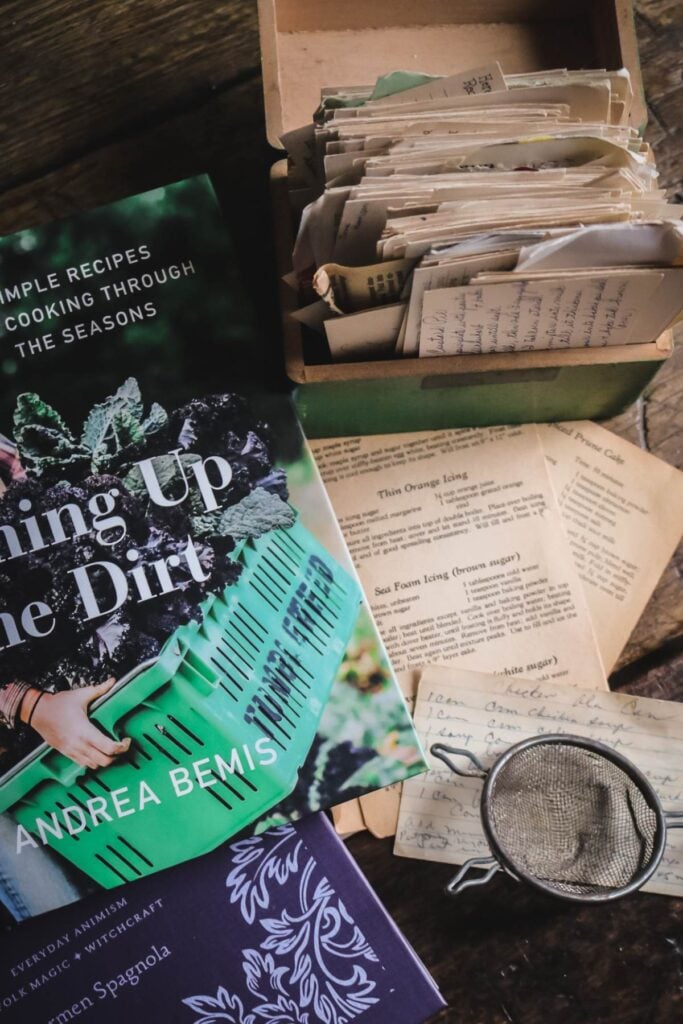
Use cookbooks for recipes (or print out recipes from your favorite recipe developers, like me). You can also print out recipe cards to keep tabs on your faves just like your grandma used to do!
Listen to CDs or tapes instead of streaming music.
Take notes by hand with pen and pencil, not the computer. Use a paper planner or find a hybrid system that works for you.
Literally use an alarm clock instead of your phone. There’s no need to have the entire world at your fingertips the first moment you open your eyes.
I’m also partial to using lots of lamps and candles whenever possible. It’s not necessarily about shifting away from screens, but they feel much more relaxing and grounding than overhead lights.
Pro tip: Pack an “analog bag.” Bring something with you that you can do instead of scrolling, like reading a book, knitting, or even sudoku puzzles.
2. Fewer screens, more faces.
As someone who deeply values community and friendship, I know firsthand how hard it can be to find ways to connect to people these days.
We are so engrossed with our lives, but those relationships really make life so much richer and more colorful.
Focus more on experiences, but don’t worry about making things picture-perfect. One of my friends calls it “scruffy hospitality,” and that label really works.
Pull out your favorite board games and order pizza. Host a book club or just have a regular friend’s night to reconnect with your favorite people. Let’s bring back the dinner party!
I personally like hosting swaps when possible, like seed swaps, book swaps, clothing swaps, etc.
Most of us have more than enough of everything, so exchanging our excess with others is a great way to keep our homes fresh while connecting over shared interests.
I also think we should be bringing back pen pals. There’s something neat about meeting someone through their writing, and I definitely want to bring this tradition back.
Let’s also commit to putting our values at the forefront. If there is a cause you believe in and you have some spare time, consider volunteering at your local food bank, library, humane society, or school.
This is a great way to meet people from different walks of life who care about the same things you do. And when we mix and match across different social groups? We really become a community.
3. Slower, less immediate projects.
We’re moving away from instant gratification and focusing on slower-growing, longer-form types of projects and content.
Read a big, thick novel that takes you weeks (or months).
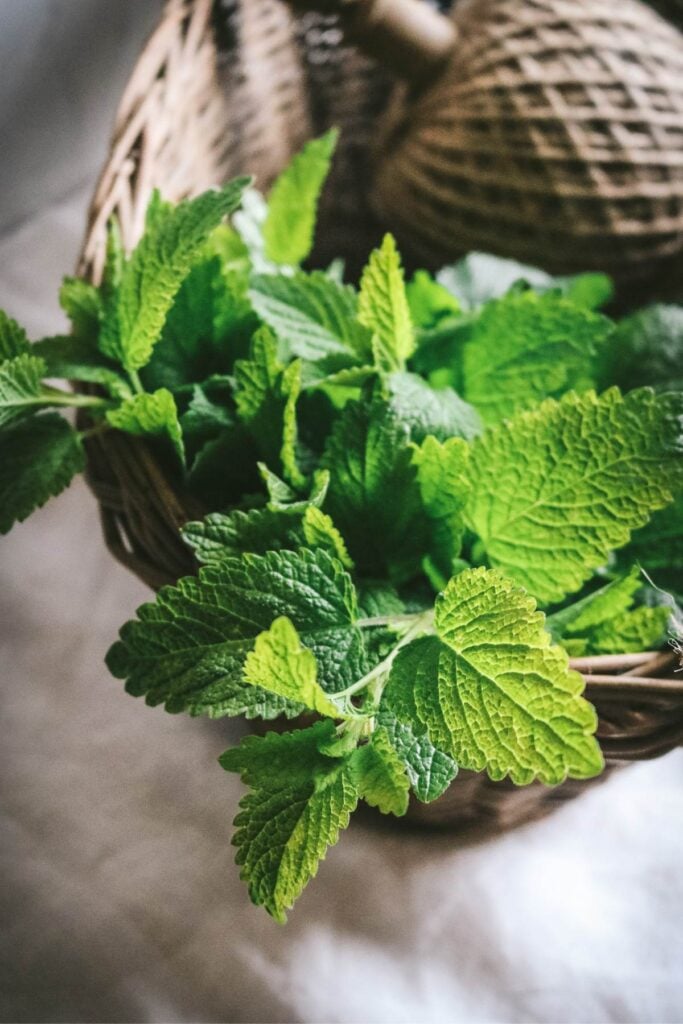
Plant a garden you need to tend to month after month. (This is one of the things I started doing back in 2013, and the level of patience required is pretty frustrating and also very rewarding).
Canning or preserving food can definitely test your patience! I enjoy the process of working through large quantities of apples or snapping green beans for canning.
My favorite apple butter recipe requires overnight cooking in the slow cooker, and although it takes a long time, the flavor is SO worth it.
And who would I be if I didn’t mention sourdough or milling your own flour here? Sourdough has become incredibly trendy again and I think part of it is because so many of us feel drawn to having tactile, hands-on projects. Plus, there’s a lot of room for experimentation.
The same goes for making homemade extracts. A good vanilla extract can take up to a year (or more) to infuse, although many other recipes are ready in mere days or weeks.
Take a class. This can be something academic, like history of the Vietnam War or post-modern American literature, or you can take a class on a particular skill or mindset.
There are lots of art and craft classes out there, as well as workshops on woodworking, canning, sourdough, and so much more.
One analog skill I think all people should learn is how to read a paper map. Learning how to figure out where you are on a map and to anticipate upcoming highways or towns is a valuable life skill and can also be very rewarding.
As someone who loves collecting antiques and also sells antiques and vintage pieces on the side, I absolutely love the process of hunting for special pieces.
It takes years and years to piece together a collection of something, and the hunt is half the fun!
Analog Hobbies to Enjoy
Hobbies are perfect for anyone who wants to slow down and feel more present. Honestly, almost any hobby could fit in this category, except maybe gaming or something really screen-heavy.
I’ve shared my favorite slow living hobbies, and that list is valid here, too. The goal is to choose something that catches your full interest and incorporates your hands or body in some way.
This can be artistic, like painting, knitting, photography, or sculpting.
Or maybe you prefer to incorporate movement, like hiking, swimming, or doing pilates.
Personally, I like to have a mix of indoor and outdoor hobbies to give me something to do during any time of year.
During the wet or cold months:
I love cozy indoor hobbies, like:
- Putting together puzzles
- Reading books
- Journaling
- Meditating
- Coloring in cozy coloring books
- Baking anything at all
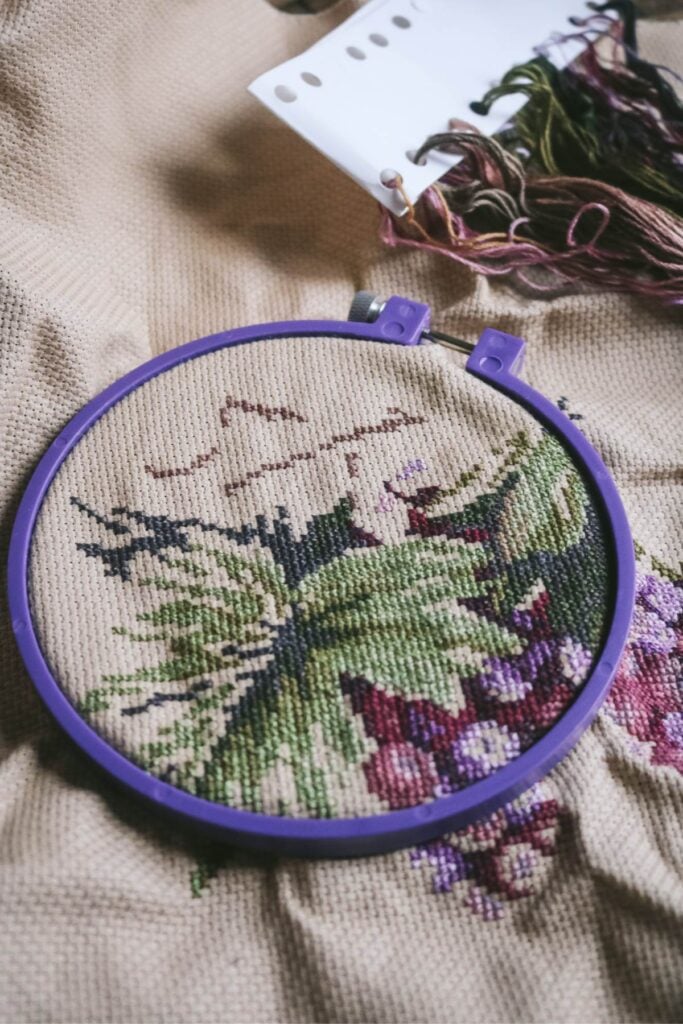
- Working on cross-stich pictures
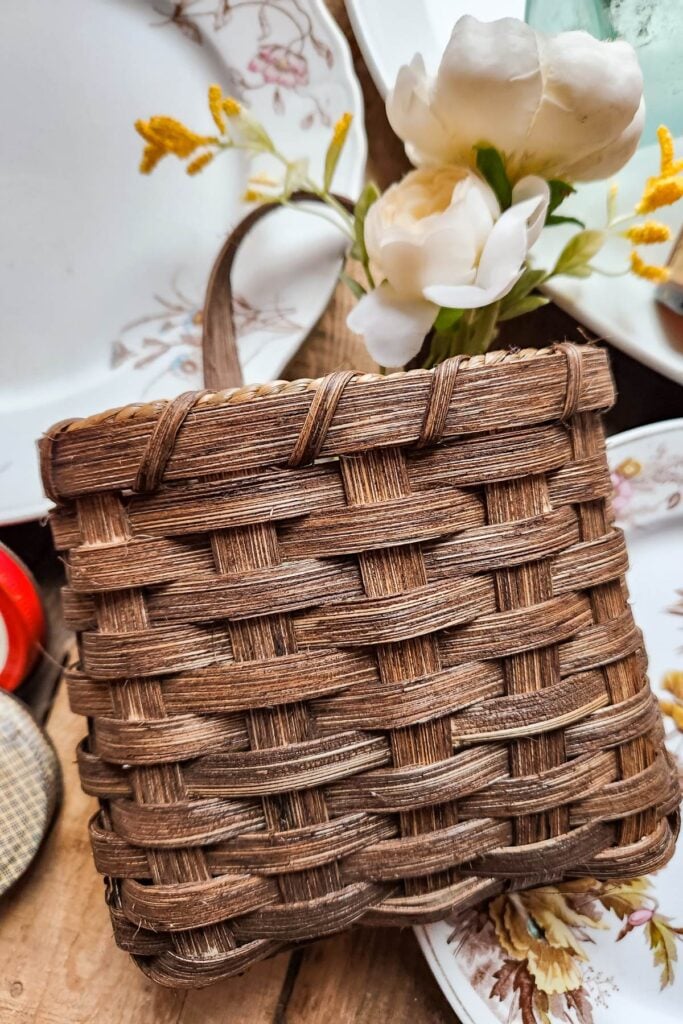
- Basket weaving
During the warmer times of year:
This is a great time to be outside as much as possible, and primetime for garage and estate sales.
You can often find me searching through someone’s old junk or a falling down barn, going for hikes, or hanging out in the garden.
Why you need to go analog this year
Really, there is so much more I can add here, but I want to focus on one thing.
Going analog isn’t about just managing your screen time or following a trend. It’s about getting back into your body and living your life.
The life you see on your screen just isn’t real.
I promise that if you were to sit down with people in your community and have real conversations with them, you would realize we have much more in common.
It’s also a return to yourself. I often consider this thought to help me reassess my own relationship with technology:
“There is a version of you from before you ever picked up a cell phone, and she misses you.”
Who were you before video games, TV, and social media took over?
I remember just being a wild, chaotic child exploring the woods around my house, making up stories, and hunting for rocks. I explored all over my neighborhood, rode bikes, went hunting and fishing, and would bring home over 20 books from the library on every visit.
And as I got older, I became more passive, absorbing what other people created.
If you were born after the mid-90s, there’s a chance you never really had the sort of wild and unscripted childhood others did. That’s okay, too. It’s not too late.
This is your chance to get back to you. To be a producer, not a consumer. To let your beautiful brain live a life that it understands – slower, more hands-on, and more connected. To shrink your world just a bit and to focus on what really matters.
So yes, this whole analog life business may be a trend right now, but it’s also just a name for something deeply human we’ve been doing all along.
And I hope this post helps you along the way. Please leave a comment if anything in this post resonated with you or if you have a tip or strategy you want to share with someone else!

If you enjoy this post, please leave a comment or ask a question below! I’d love to hear what you think and hear about your own experiences.
Want more seasonal recipes? Subscribe for email updates or follow Milk Glass Home & Kitchen on social media. Join my Facebook Group Seasonal Slow Living to become part of the community!




Rachael, Thanks for all the ideas for how people can live more intentionally and mindfully. Growing up in the 70s and 80s, I have kept up with many of these habits despite all the technology around us. Tending my flower gardens, writing to pen pals, reading novels, and baking all keep me grounded and much happier. Also finding the Montessori classroom and lifestyle is a great way to reconnect with nature, pencil paper, and hands-on activities.